Williamsburg Montessori School is the top choice for families looking for a Montessori approach to learning for their student’s education. We meet each child at their level of understanding, and nurture that understanding with engaging and appropriate classroom materials, diligent guidance and respect.

- Dr. Maria Montessori
and Emotional Development
EXPERIENCE WILLIAMSBURG MONTESSORI SCHOOL
42 Years of Montessori Education in Williamsburg, VA
We are dedicated to creating confident, self-reliant and self-motivated children, from toddlers to adolescents, who are prepared for the adventure of life.
18 Months – 3 Years
Toddler Program
Much more than daycare, the toddler program helps our youngest students develop language and social skills, coordination and cognitive learning.
Ages 3 – 6 Years
Children’s House
Children in their preschool years engage in hands-on learning and explore the world with all their senses as they build a strong foundation for success in school and beyond.
Ages 6 – 12 Years
Elementary School
Elementary school students take advantage of challenging academics and an integrated curriculum to problem solve, work collaboratively, and pursue personal interests. The result is a highly engaged student who loves school.
Ages 12 – 14 Years
Middle School
Community partnerships, service learning, field studies and academic rigor combine in an environment that respects the unique developmental needs of adolescence to make a truly dynamic learning experience in our middle school.
ENGAGING & TRANSFORMATIONAL EDUCATION
Montessori Learning at its Best
We chose WMS for our children because the extraordinary teachers from pre–K to middle school meet students where they are in their educational journeys, then show them how to go beyond what they thought they could achieve. Not only have my kids learned more at WMS than their age–level peers in the full range of academic subjects, they’ve discovered a desire to learn more—to try harder, push deeper, and go farther.
TOURS AVAILABLE & APPLICATIONS ACCEPTED YEAR-ROUND
We Love New Students
Come and join the WMS community! Starting the enrollment process is easy:
- Contact us by phone, email or online inquiry form
- Schedule a tour
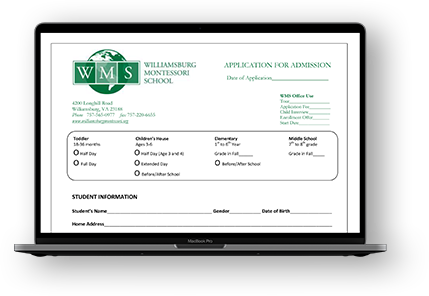
- Fill out an enrollment application
No person shall, on the basis of race, color, religious belief, national origin, or sex, be excluded from participation, be denied the benefits of, or be subjected to discrimination under any WMS program.

Sandy Andrews
HEAD OF SCHOOL
“It takes a village to raise a child” is a popular African proverb. Here at WMS, it could read, “it takes a community to educate a child.” Educating children is both a privilege and a responsibility. From toddlers to fourteen year-olds, the children with whom we spend our days offer a glimpse of the future and a vision of what is possible when a community works together. From the Board of Directors, whose dedicated efforts produces a long term strategic plan, to the directresses who guide our children in their growth and learning, to parents who give generously of their time and talent, all of us create a “village” for our children. Together we will continue as a community working to foster the “love of learning” for our children and watching their progress with joy.”
